

Pam Fichtner, RMT | Breast and Chest Health Educator | Founder, Sephira Healing | Saskatoon, Saskatchewan
TL;DR
- Body shame is learned and can begin as early as age six
- How adults talk about their bodies shapes how children relate to their own for decades
- Consent education is body education
- Body shame can make it harder to seek care, including breast and chest health care
- Therapeutic touch, done with consent and care, can help people reconnect with a part of their body they've been avoiding
Most of us didn't choose our first feelings about our bodies. They came from the world around us.
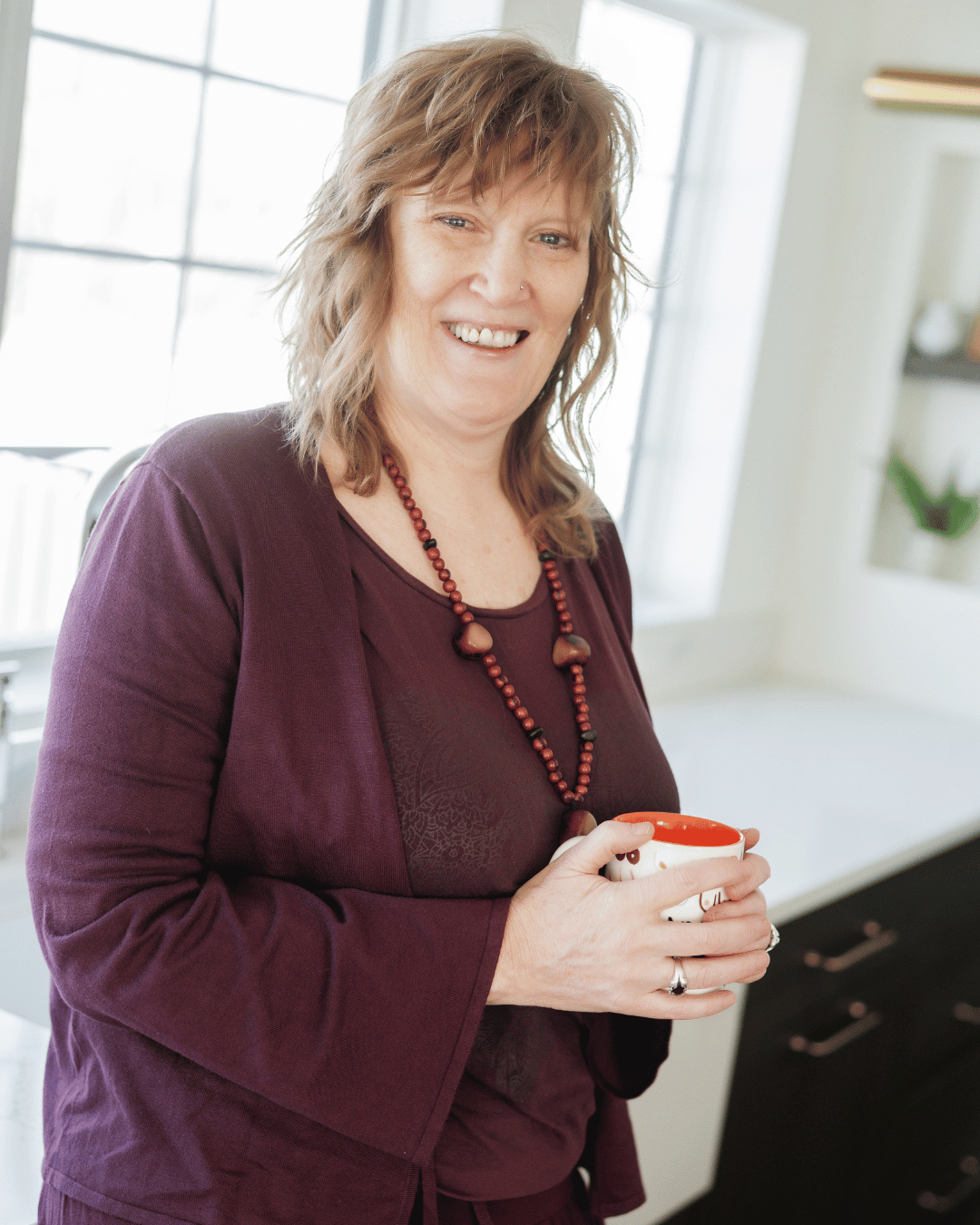
I'm Pam Fichtner, a Registered Massage Therapist, breast and chest health educator, and court-recognized expert witness in breast massage therapy in Saskatchewan. I founded Sephira Healing in Saskatoon in 2004, and in nearly 30 years of clinical practice, I've supported women, trans, and non-binary people at every stage of their breast and chest health journey — from general wellness and self-care to post-surgical recovery and life with or beyond cancer.
I grew up with large breasts as a teenager, and I spent years hiding them under oversized shirts. When I reflect back now, I don’t think I did that because I chose to. It’s because somewhere along the way, I got the impression that my body needed to be made smaller and I should cover up anything that might draw attention to it. It’s taken years of study and practice to fully understand what had happened.
The shame I carried wasn't mine to begin with. It was taught.
And I'm not alone in that.
May 4–10 is Mental Health Week in Canada and this year, I want to talk about something that sits right at the intersection of mental health and body health. The messages we perceive about our bodies from childhood onward, and what it actually takes to change them.
Is body shame something we're born with or something we learn?
We learn it. And research shows it can start surprisingly early.
A 2023 study published in Sex Roles found that body shame appears in children as young as six, and is directly linked to how parents pay attention to their children's appearance. (Bouderbala et al., 2023)
Children notice how the adults around them talk about their bodies. They notice what gets talked about openly and what gets said behind closed doors, hushed or avoided.
Breasts and chests are a good example. They tend to get treated one of two ways: either too sexual to mention, or too medical to relate to.
By the way, breast and chest tissue is not exclusive to women. Let’s normalize that. People assigned male at birth have breast tissue too. So do transgender women, transgender men, and non-binary people.
The silence and avoidance around this part of the body affects anyone who has a chest, regardless of how they identify or what their body looks like.
That silence has a cost.
People grow up not knowing what their own breast or chest tissue feels like. They avoid touching that area because it feels awkward, embarrassing, or somehow inappropriate — even when they're alone.
What does consent have to do with breast and chest health?
So much! Consent education often gets framed as a safety conversation for teenagers. But it starts (or should start) much earlier.
At its core, it's about a very simple message. Your body belongs to you.
Teaching children that their body belongs to them helps them build confidence in advocating for themselves throughout life.
When a child is told they don't have to hug someone if they don't want to, that's not just about manners. It's the beginning of a much longer lesson. It teaches them that how something feels in their body is important information. That they have the right to say what does and doesn't feel okay and that their comfort matters.
Research shows that children are more aware of body ownership and autonomy than we often give them credit for. Teaching consent early has lasting effects on how they navigate healthcare, relationships, and their own sense of safety. (Alderson, 2024, PMC)
That foundation shapes whether a young person can:
- speak up during a medical appointment when something doesn't feel right
- ask questions about their body without shame
- feel safe enough to access breast or chest health care later in life
I've worked with clients who came to me after years of avoidance. No one had really ever taught them that this part of their body was worth paying attention to with regard to their whole person health and wellbeing.
Consent isn't a grown-up topic. It's the earliest lesson in body respect.
Does how we speak about our own bodies affect our children?
Yes. Children learn from what they see and hear every day.
A meta-analysis of 42 studies found that criticizing children's weight leads to negative self-perception and disordered eating. But it’s not only direct criticism that affects them. When a parent speaks badly about their own body, children draw their own conclusions about whether bodies like theirs are acceptable. (Slate / Virginia Sole-Smith, 2019, citing meta-analysis)
Before I became a massage therapist, I worked in social services — including time at the Downtown Eastside Women's Centre in Vancouver, one of the most demanding frontline environments in Canada. I worked alongside women living with poverty, addiction, and trauma. I watched what happened when they didn’t believe their body deserved respect or care.
I also watched what happened when they finally did.
A respectful hand on a shoulder or hug impacted them in a way words never could. That's what brought me to this work. And it's why I believe so strongly that safety, consent, and body respect need more conversations, and that what we model matters.
We need to:
- treat a health appointment as normal rather than with fear, shame or avoidance
- name body parts clearly and without embarrassment
- take care of whole selves and include breast or chest health without apologizing for it
Does body shame actually affect your health?
Yes. And this connection is important.
Body shame doesn’t just affect your self-image. It’s associated with higher rates of anxiety, depression, and poorer quality of life. (Rodgers et al., 2023, Global Mental Health / PMC).
Studies also show that shame can lead people to conceal symptoms, avoid disclosing concerns to their doctor, and delay treatment altogether. (Dolezal et al., 2017, PMC)
This is especially true for breast and chest health.
People assigned female at birth are most often the focus of breast health conversations, but people assigned male at birth can also develop breast conditions, including breast cancer, and they are far less likely to catch it early because the topic is so often treated as though it doesn't apply to them.
Transgender and non-binary people face their own distinct barriers, including care settings that weren't designed with them in mind.
Knowing what your breast or chest tissue normally feels like, noticing when something seems different, and being able to talk about it with a practitioner without embarrassment can protect you. You’ll be more likely to speak up early, get the support you need, and feel confident doing it.
Body image is a health issue. It deserves to be treated like one.
Can therapeutic touch help you reconnect with your body?
For many people, yes.
Part of what I do at Sephira Healing is help people develop a different relationship with their breast or chest, often for the very first time. For many clients, this is a genuinely new experience. It’s not a cold or clinical experience you have to get through. It’s slow, attentive, and consent is clear. Questions are welcome, and it’s a place where you as a whole person can be present, not just the body part.
One client told me she had never once touched her own chest with kindness before coming to see me. She was in her 50s.
I wasn't surprised. I've heard versions of that story hundreds of times.
But after that, she was able to start some self-care for her breasts. She has more confidence and the therapeutic benefits of breast and chest massage therapy are long.
That’s what this work is about. And it doesn't start in a treatment room. It starts in the messages we receive, the silences we inherit, and the conversations we choose to have differently.
Questions to Ask Yourself About Your Breast and Chest Health
Whether you're a parent, a person navigating your own relationship with your body, or someone who works with others in any capacity, it’s a good time to ask yourself:
- What messages did you pick up on about your own body growing up? And which ones are you still carrying?
- How do you speak about your own body in front of other people? In front of yourself?
- Is there a part of your body (breast or chest included) that you've been avoiding, ignoring, or disconnecting from?
You don't have to have any of this figured out. It starts with awareness. And then, you can go from there.
You Don't Have to Navigate This Alone
Body shame is common. So is the disconnection that follows it. But common doesn't mean permanent — and it doesn't mean you have to figure it out on your own.
At Sephira Healing, my goal is to help you feel more at ease in your body and more confident in what it's telling you. Whether you're looking for education, self-care tools, or hands-on breast and chest massage therapy, care that feels safe, informed, and respectful is available to you.
You don't have to wait for a crisis to come see me. Many clients tell me they didn't know how much they needed this kind of support until they experienced it.
[Explore Classes] [Book a Session]
FAQ: Body Image, Consent, and Breast and Chest Health
What does consent have to do with breast and chest health care?
Quite a lot. Research suggests that body shame can make it harder to seek care — people may skip self-exams, delay appointments, or stay quiet about pain or changes they notice. Not because they don't care, but because the discomfort and avoidance get in the way. Building a more aware, comfortable relationship with your breast or chest is part of whole-body health — not separate from it.
Is it normal to feel disconnected from your breast or chest tissue?
Very. Many people go years — sometimes their whole lives — without ever touching that part of their body with curiosity or care. This is especially common for people who carry body shame, have experienced trauma, or grew up in environments where the chest and breast area was treated as off-limits, sexual, or simply never discussed. That disconnection is understandable. It's also something that can change.
How do I talk to kids about bodies and consent without making it awkward?
The most effective approach is usually also the simplest: use accurate body part names, respond to questions calmly and without embarrassment, and model that your own body deserves respect and care. You don't need a formal script. Children pick up far more from what they observe than from what they're told directly. If you respond to a child's question about their body with ease and honesty, you're already teaching them something important.
Does breast and chest health apply to people of all genders?
Yes. Breast tissue exists in people of all genders — including people assigned male at birth, transgender women, transgender men, and non-binary people. People assigned male at birth can develop breast conditions including breast cancer, though they are far less likely to be screened or diagnosed early because it's so rarely discussed. At Sephira Healing, breast and chest care is available to everyone, regardless of gender or identity.
What is breast and chest massage therapy and what is it used for?
Breast and chest massage therapy is a legitimate, evidence-informed area of massage therapy practice. It can support lymphatic drainage, ease muscle tension in the chest wall, help with scar tissue healing after surgery or injury, and support general breast and chest tissue health. At Sephira Healing, it is always offered with explicit, ongoing consent and within a trauma-aware framework. It is not a trend, and it is not a cure-all — it is skilled therapeutic care.
Can therapeutic touch really change how you feel about your body?
Many clients tell me it does. For people who have spent years avoiding a part of their body, being cared for in a way that is slow, respectful, and consent-based can shift something that goes beyond the physical. Clients often leave feeling more comfortable doing their own self-care, more confident about noticing changes, and more at ease in their body than they expected. I'm not promising a particular outcome — but I have seen this shift happen hundreds of times.
What does a session at Sephira Healing involve?
Every session begins with a conversation. I want to understand what you're experiencing, what feels concerning, and what you're hoping to get from your care. Consent is explicit, ongoing, and never assumed. From there, sessions may include breast and chest massage therapy, lymphatic drainage massage therapy, craniosacral therapy, or trauma-aware somatic bodywork, depending on what your body needs. Many clients also leave with simple self-care practices they can use at home. My goal is never to create dependence — it's to help you feel more informed, more comfortable, and more at ease in your own body.
Pam Fichtner, RMT | Breast and Chest Health Educator | Founder, Sephira Healing | Saskatoon, Saskatchewan
Sources
- Bouderbala et al. (2023). Body shame in 7–12-year-old girls and boys: The role of parental attention to children's appearance. Sex Roles. https://pubmed.ncbi.nlm.nih.gov/37360900/
- Mental Health Foundation. Body image report — executive summary. https://www.mentalhealth.org.uk/explore-mental-health/articles/body-image-report-executive-summary
- Sole-Smith, V. (2019). How to talk to kids about weight and body shaming. Slate. https://slate.com/human-interest/2019/01/child-body-image-advice-weight-shaming.html (citing 2016 meta-analysis of 42 studies)
- Alderson, P. (2024). Bodily integrity and autonomy of the youngest children and consent to their healthcare. PMC / PubMed. https://pmc.ncbi.nlm.nih.gov/articles/PMC11606759/
- Reichel, L. (2020). To teach young kids the concept of consent, focus on bodily autonomy. WHYY. https://whyy.org/articles/to-teach-young-kids-the-concept-of-consent-focus-on-bodily-autonomy/
- Rodgers, R. F. et al. (2023). Body image as a global mental health concern. Cambridge Prisms: Global Mental Health / PMC. https://pmc.ncbi.nlm.nih.gov/articles/PMC9970735/
- U.S. Office on Women's Health. Body image and mental health. https://womenshealth.gov/mental-health/body-image-and-mental-health/body-image
- Lamont, E., Flynn, M., & Stewart, T. (2024). Body shame predicts healthcare discomfort and avoidance in college women. International Journal of Behavioral Medicine. https://link.springer.com/article/10.1007/s1 2529-024-10341-y
- Dolezal, L. et al. (2017). Health-related shame: An affective determinant of health? PMC. https://pmc.ncbi.nlm.nih.gov/articles/PMC5739839/


