Sephira Healing Blog

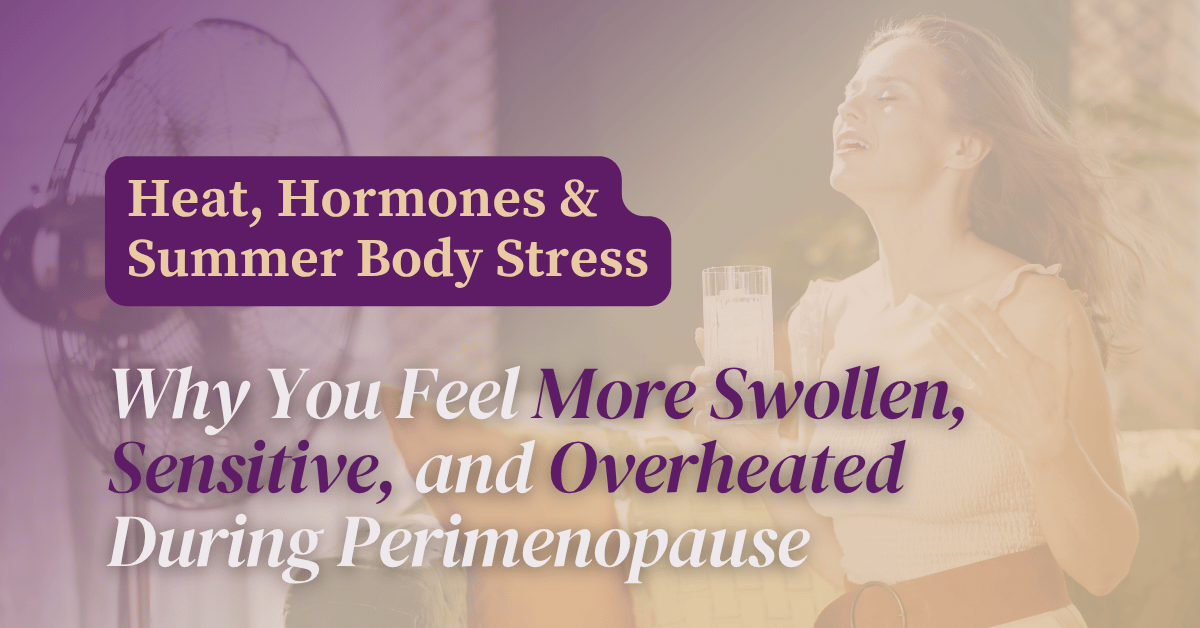
Heat, Hormones & Summer Body Stress: Why You Feel More Swollen, Sensitive, and Overheated During Perimenopause

Heat, Hormones & Summer Body Stress: Why You Feel More Swollen, Sensitive, and Overheated During Perimenopause

Pam Fichtner, RMT | Breast and Chest Health Educator | Founder, Sephira Healing | Saskatoon, Saskatchewan

TL;DR
Perimenopause and summer heat can be a brutal combination. Hot flashes, swollen breasts, tight rings, irritated skin, exhaustion, sensory overload, and feeling uncomfortable in your own body are all common experiences during this stage of life that many women are never warned about.


This article explains:
• Why hot flashes and heat intolerance happen
• Why breast tenderness and swelling get worse in summer
• Why your rings, ankles, and body suddenly feel puffier
• Why your skin becomes more sensitive and reactive
• Why noise, crowds, heat, and busy days suddenly feel overwhelming
• What actually helps support your body during this transition


Heat feels more intense during perimenopause. You’re hotter. Your breasts ache more. Your rings are tighter in the afternoon. Your skin is reacting to things it never did before. You’re more tired, more sensitive, more easily overwhelmed — and you can’t quite explain it to anyone who isn’t living it.

Pam Fichtner RMTI’m Pam Fichtner, a Registered Massage Therapist and a breast and chest educator and speaker. I’m the founder of Sephira Healing in Saskatoon and I’ve spent nearly 30 years working with the bodies of people navigating hormonal transitions, and every summer I see a surge of clients coming in and telling me about a new pain or symptom.


I’m going to explain what really happens when perimenopause meets the heat, and what can genuinely help.


Why Heat Feels More Intense During Perimenopause


If you feel like you can’t tolerate the heat like you used to, there’s a physiological reason, and it starts in the brain.


Estrogen affects the part of the brain that controls your body temperature. When estrogen levels are unstable during perimenopause, your body becomes more sensitive to heat and temperature changes.


The result is hot flashes: a sudden surge of heat, often accompanied by flushing, sweating, and sometimes a chill afterward. Research suggests hot flashes affect an estimated 50–80% of people going through the menopause transition.


Night sweats are the nighttime version of hot flashes, and disrupted sleep can make heat intolerance even worse the next day.


Why Your Breasts and Chest Feel More Tender, Swollen, or Sensitive
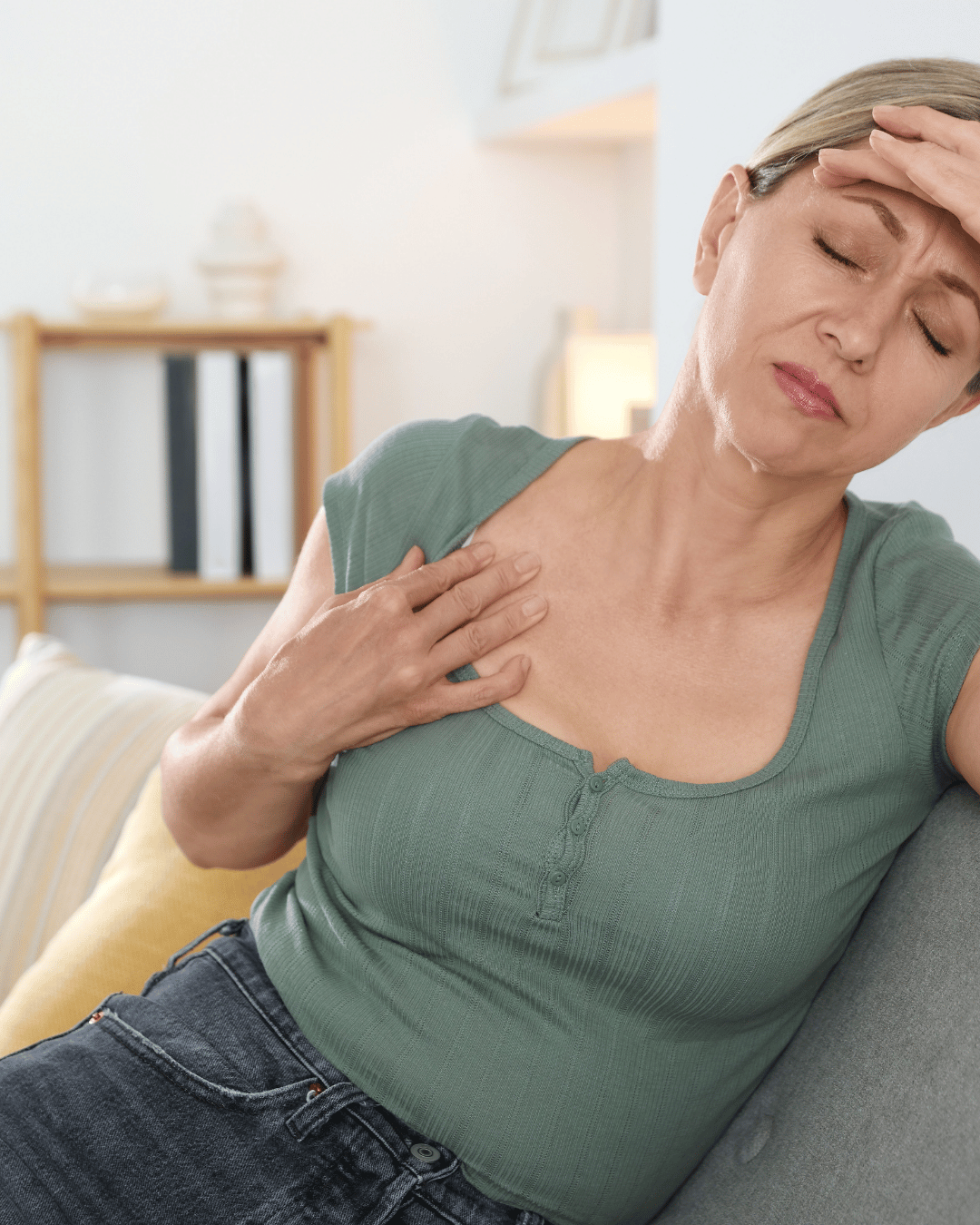
Woman having a hot flash and holding above swollen breastBreast tenderness is one of the most common and least-discussed symptoms of perimenopause. Research from the Centre for Menstrual Cycle and Ovulation Research (UBC) found that approximately one in three women in early perimenopause experience breast tenderness.


This is because breast tissue contains receptors that are sensitive to both estrogen and progesterone. During perimenopause, estrogen levels don’t simply decline. They spike unpredictably before eventually tapering off. These estrogen surges can cause breast ducts to enlarge and tissue to hold more fluid. Progesterone, which normally helps balance estrogen’s effects, is often lower during this phase, making the breast tissue more sensitive, swollen, and tender.


What you might feel:
• Aching, burning, or stabbing sensations in one or both breasts
• Generalized tenderness or a sense of fullness that doesn’t follow your usual cycle
• Nipple sensitivity that feels new or heightened
• Breast tissue that feels lumpier, denser, or more fibrocystic than before
• Swelling that worsens before a period, in heat, or seemingly at random

In summer, this often gets worse. Heat increases fluid buildup in the tissues, and if the lymphatic system is already slowed down by hormone changes, that extra fluid does not drain as easily. The result can be more swelling, heaviness, and tenderness.

What to watch for: tenderness and cyclical swelling are common in perimenopause and are usually benign. However, a new lump that feels different from surrounding tissue, skin dimpling, nipple discharge, or one-sided symptoms that don’t go away, are important to get checked out by your healthcare provider. Get to know what your normal is so you can recognize changes quickly.


Why Swelling Gets Worse in Hot Weather

You notice it around your ankles at the end of a long day. Your rings are tighter by midafternoon. Your sleeves may feel tighter on one side than the other. Summer swelling is a real thing, and in perimenopause, it’s often worse.


Two things are happening at once.


First, hormones. Fluctuating estrogen can cause the body to hold onto more fluid. It’s the same reason many women feel swollen before a period. During perimenopause, estrogen levels can spike unpredictably, so the swelling can feel random too.


Second, heat. Hot weather causes blood vessels to widen, which pushes more fluid into the surrounding tissues. Your lymphatic system is responsible for moving that fluid back out, but it does not have a pump. It relies on movement, muscle contraction, and deep breathing to keep fluid moving. Heat can slow that process down even more.


The combination of hormone-related fluid retention and slower lymphatic drainage is why summer swelling during perimenopause can feel so intense.


What helps?
• Gentle movement and walking
• Staying hydrated
• Elevating your legs
• Avoiding long periods of sitting or standing in the heat
• Manual lymphatic drainage for more ongoing or significant swelling


Why Your Skin Suddenly Feels More Sensitive in Summer

Estrogen plays a big role in keeping skin strong, hydrated, and resilient. As estrogen levels become more unpredictable during perimenopause, many people notice their skin becoming drier, thinner, more sensitive, and more easily irritated.

Womans chest and breast sensitivity with a flowerYou may notice:
• Itching or prickling that seems to come from nowhere (a condition sometimes called pruritus)
• Increased sun sensitivity or faster burning
• Chafing and under-breast irritation from heat and sweat, worsened by tissue sensitivity
• Rashes or heat rashes appearing where they didn’t before
• Products, fabrics, or detergents that previously caused no reaction now causing irritation

The skin under and between breast tissue is especially vulnerable because heat, sweat, friction, and moisture all build up there quickly.


WHAT CAN HELP
• Loose, breathable, moisture-wicking clothing
• Proper bra fitting to reduce friction and pressure under the breasts
• Barrier creams for irritated or chafed skin
• Gentle, fragrance-free products during times of increased sensitivity
• Avoiding tight bra bands and synthetic fabrics during hot weather


Why Summer Can Feel More Overstimulating and Exhausting


This is the symptom most often dismissed, and the one I hear about often from clients.


You used to be able to handle a busy day, a hot afternoon, a social event, or a crowded space. Now those same things can feel overwhelming. You come home depleted in a way that rest doesn’t fully fix. You’re more irritable, less patient, and more sensitive to noise, heat, and sensory input.

Hormone changes during perimenopause affect the nervous system too. Sleep becomes disrupted, stress feels harder to recover from, and summer heat adds even more strain to a body that is already working harder than usual.


“Perimenopause is largely neurological in nature. Neurological symptoms that emerge during perimenopause are indicative of disruption in multiple estrogen-regulated systems, including thermoregulation, sleep, circadian rhythms and sensory processing.” — PMC, 2015


This is all treatable. Your body responds to nervous system support, body-aware care, rest, and reducing stress on the body.


What Actually Helps With Summer Body Stress During Perimenopause

There is no single fix. But there are some practical strategies grounded in physiology that can make a real difference.

For heat and hot flashes

• Layer clothing so you can adjust quickly when a flash hits
• Keep a cold water bottle or cooling cloth accessible, particularly at night
• Lower the thermostat or use a fan at night — sleep environment temperature matters significantly for hot flash frequency
• Avoid known triggers where possible: alcohol, caffeine, spicy foods, and warm rooms can all lower the threshold
• Cold water on the wrists and neck provides rapid cooling when a flash is building

For breast and chest tenderness and swelling

• Choose bras with soft, wide bands and no underwire during periods of heightened tenderness — compression worsens congestion
• Moisture-wicking, breathable fabrics reduce under-breast irritation
• Gentle self-lymphatic massage supports fluid movement — this is something I teach clients directly
• Cold compresses can temporarily reduce acute tenderness
• Breast and chest massage therapy addresses tissue congestion directly and is one of the most underutilized supports for this symptom

For general swelling and fluid retention

• Move regularly — even short walks support lymphatic circulation
• Stay well-hydrated; dehydration paradoxically worsens fluid retention
• Elevate legs during rest periods
• Avoid prolonged sitting, particularly in heat
• Manual lymphatic drainage is clinically effective for significant or persistent swelling

For nervous system overload and sensory overwhelm

• Reduce load deliberately: you don’t have to earn rest
• Slow, diaphragmatic breathing activates the parasympathetic nervous system and is one of the fastest tools for nervous system regulation available to you right now
• Somatic bodywork and craniosacral therapy support the nervous system’s ability to shift out of chronic activation — not by talking about stress, but by working directly with the body’s response to it
• Prioritize sleep environment above almost everything else: temperature, light, and noise control matter more during this transition than at most other times in life
• Stop explaining your capacity to people who aren’t experiencing what you’re experiencing. This is real, and it warrants real accommodation.

When Symptoms Should Be Checked by a Healthcare Provider

Most of what’s described in this blog is uncomfortable but not dangerous. Perimenopause is a biological transition, and many of these symptoms are common during this stage of life.


However, some symptoms should be checked out:
• A new lump in the breast or chest that feels different from surrounding tissue or that doesn’t change with your cycle
• One-sided breast swelling, redness, or warmth that persists and worsens
• Nipple discharge that is new, unexpected, or blood-tinged
• Skin dimpling, puckering, or changes in texture on the breast or chest
• Swelling that is severe, sudden, or significantly asymmetrical
• Hot flashes or night sweats severe enough to significantly disrupt daily functioning or sleep over an extended period — these are treatable, and you don’t have to manage them alone
• Any symptom that feels new, unusual for you, or simply wrong in a way you can’t explain


You Are Not Imagining It

Perimenopause can make us feel almost crazy at times. We doubt ourselves. We downplay things. And it doesn’t help when we’re told these symptoms are “just part of getting older.”


I want to say this clearly. The heat sensitivity is real. The breast tenderness is real. The swelling, exhaustion, and overstimulation are real too.


Perimenopause affects more than hormones. It can affect body temperature, the nervous system, fluid retention, breast tissue, and skin sensitivity all at once. Summer heat can make all of it feel worse.


Understanding what’s happening in your body matters because it helps you support your body differently instead of fighting against it.


If you’d like help navigating swelling, tenderness, or nervous system overwhelm, I’d love to explore some treatment options with you.


https://www.sephirahealing.ca/treatment-options.html#ld


Frequently Asked Questions About Perimenopause and Summer Body Changes


Why am I so hot all the time lately?

If you’re in your late 30s to early 50s and have noticed increased heat sensitivity, you may be in perimenopause. Estrogen plays a direct role in the brain’s temperature regulation system. As estrogen levels become erratic, the hypothalamus becomes hypersensitive to small temperature changes — triggering disproportionate heat responses even in mild warmth. It’s not your imagination, and it’s not “just” hot flashes. It’s a shift in how your nervous system processes temperature.


Why do my breasts hurt more in summer?

Summer heat increases circulation and encourages fluid to move into surrounding tissues. If your lymphatic system is already working harder due to hormonal changes, that fluid has less efficient pathways out. Combine this with the erratic estrogen spikes of perimenopause — which cause breast tissue to retain fluid and become more sensitive — and summer can significantly amplify existing breast tenderness. Breast and chest massage therapy and gentle lymphatic drainage are among the most effective hands-on supports for this.


Is the swelling I notice in summer related to perimenopause or just the heat?

Both. Heat dilates blood vessels and pushes fluid into tissues. But perimenopause adds a hormonal layer: high estrogen levels encourage fluid retention independently. If you notice that your summer swelling is more pronounced than it was in previous years, perimenopause is likely contributing. The combination of the two — thermal and hormonal — is why it can feel so disproportionate.


Why do I feel so easily overwhelmed and exhausted in summer now?

Perimenopause affects the nervous system directly — estrogen and progesterone both play regulatory roles in how the brain handles stress, sensory input, and recovery. When their levels fluctuate, the nervous system becomes more reactive and less resilient. Summer adds additional physiological load: heat stress, disrupted sleep from night sweats, and constant thermoregulatory effort. The result is a system working at or near capacity before the day has even started. This is real, it’s documented, and it warrants real rest and support.


Can massage therapy actually help with perimenopause symptoms?

Yes, for several specific symptoms. Manual lymphatic drainage is clinically supported for reducing swelling and fluid retention. Breast and chest massage therapy can address tissue congestion, tenderness, and the discomfort of fibrocystic changes. Craniosacral therapy and somatic bodywork support the nervous system’s ability to regulate — particularly relevant when perimenopause is producing the kind of exhaustion and overwhelm described above. Massage therapy is not a hormonal treatment and won’t stop perimenopause. But it can meaningfully address several of the physical symptoms that make it harder to live in your body during this transition.


When should I see a doctor about breast changes during perimenopause?

Cyclical tenderness, swelling, and density changes are common in perimenopause and are usually benign. See a healthcare provider if you notice: a new lump that doesn’t change with your cycle, skin dimpling or puckering on the breast, unexpected nipple discharge, one-sided swelling that persists, or any change that feels unusual for your body. Trust your instincts. You know your normal better than anyone.

Pam Fichtner, RMT | Breast and Chest Health Educator | Founder, Sephira Healing | Saskatoon, Saskatchewan


Sources & References

Bhatt DL, et al. (2025). Effects of menopause on temperature regulation. Temperature (Taylor & Francis). https://doi.org/10.1080/23328940.2025.2484499
Brinton RD, et al. (2015). Perimenopause as a neurological transition state. PMC. https://pmc.ncbi.nlm.nih.gov/articles/PMC9934205/
Prior JC. (2014). Progesterone for symptomatic perimenopause treatment. PMC. https://pmc.ncbi.nlm.nih.gov/articles/PMC3987489/
Bjelland J. (2025, October). Survey results: Perimenopause and menopause in sensitive and neurodivergent women. https://www.juliebjelland.com/hsp-blog/survey-results-perimenopause-and-menopause-in-sensitive-and-neurodivergent-women-by-julie-bjelland-lmft
Cleveland Clinic. (2024, January). Does menopause cause breast pain? https://health.clevelandclinic.org/breast-pain-menopause
HealthyWomen. Perimenopausal breast tenderness. https://www.healthywomen.org/ask-expert/perimenopausal-breast-tenderness
Healthline. (2024, April 3). Menopause breast pain and tenderness: Causes and treatment. https://www.healthline.com/health/menopause/sore-breasts-menopause
Bonafide Health. (2025, July 16). Hot weather and menopause. https://hellobonafide.com/blogs/news/hot-weather-and-menopause
National Sensory Network. Understanding sensory processing and menopause. https://www.nationalsensorynetwork.org/pages/understanding-sensory-processing-and-menopause
A.Vogel. (2024). Sensory overload: What causes it during perimenopause and menopause. https://www.avogel.co.uk/health/menopause/videos/sensory-overload-what-causes-it-during-perimenopause-and-menopause/


You Don’t Have to Explain Your Body to Deserve Care

You Don’t Have to Explain Your Body to Deserve Care
JUNE BLOG – PRIDE GROWS HERE – SEPHIRA HEALING


A Guide to Breast and Chest Health for Women, Men, Trans, and Nonbinary People in Canada


Pam Fichtner, RMT | Breast and Chest Health Educator | Founder, Sephira Healing | Saskatoon, Saskatchewan


TL;DR – Key Takeaways

✓ Breast and chest health applies to every body – women, men, trans, and nonbinary people. Most people were never taught how to understand theirs.
✓ The biggest barrier to care for many Canadians, especially LGBTQ+ people, is fear of being judged when seeking it.
✓ Breast and chest tissue changes throughout life because of hormones, surgery, binding, and aging. Familiarity with your own body matters more than matching a textbook.
✓ This guide includes a simple, pressure-free starting point for getting to know your body. Research shows 96% of breast cancers are first identified by the person themselves – which is exactly why body familiarity matters.
✓ Sephira Healing in Saskatoon offers breast and chest massage therapy, lymphatic drainage, post-surgical recovery support, and educational programs for every kind of body.


Jun Blog1 1

A lot of people have questions about their breast or chest health, but they don’t ask. Sometimes they sit on those questions for years. And sometimes they wait until they can’t anymore.

When I’ve asked why, the answer is usually some version of the same thing. At some point, they felt judged, or they were afraid they would be. They felt like they didn’t know enough, like they had the wrong kind of body, or like they were a problem. A nuisance. An inconvenience. Too much to deal with.

There’s research on this. Studies looking at cancer screening across 2SLGBTQI+ communities keep coming back to the same finding. The strongest predictor of whether someone seeks care is whether they feel safe with their provider. Not how informed they are. Not how close the clinic is. 

I believe every body deserves care that feels safe, respectful, and accessible. With Pride Month here, it felt like the right time to speak more openly about some of my own experiences and why this matters so much to me personally.

As someone who identifies as bisexual while also being in a heterosexual relationship, I know what it feels like to carry parts of yourself that are not always immediately visible to other people. I also have a nonbinary child, which deepened my learning and understanding even further in ways that became both personal and important to me.

The more I learned about gender identity, expression, attraction, and the experiences many LGBTQ+ people have within healthcare spaces, the more intentional I became about creating an environment where people feel safe, respected, and able to show up fully as themselves without fear of judgment or assumptions.

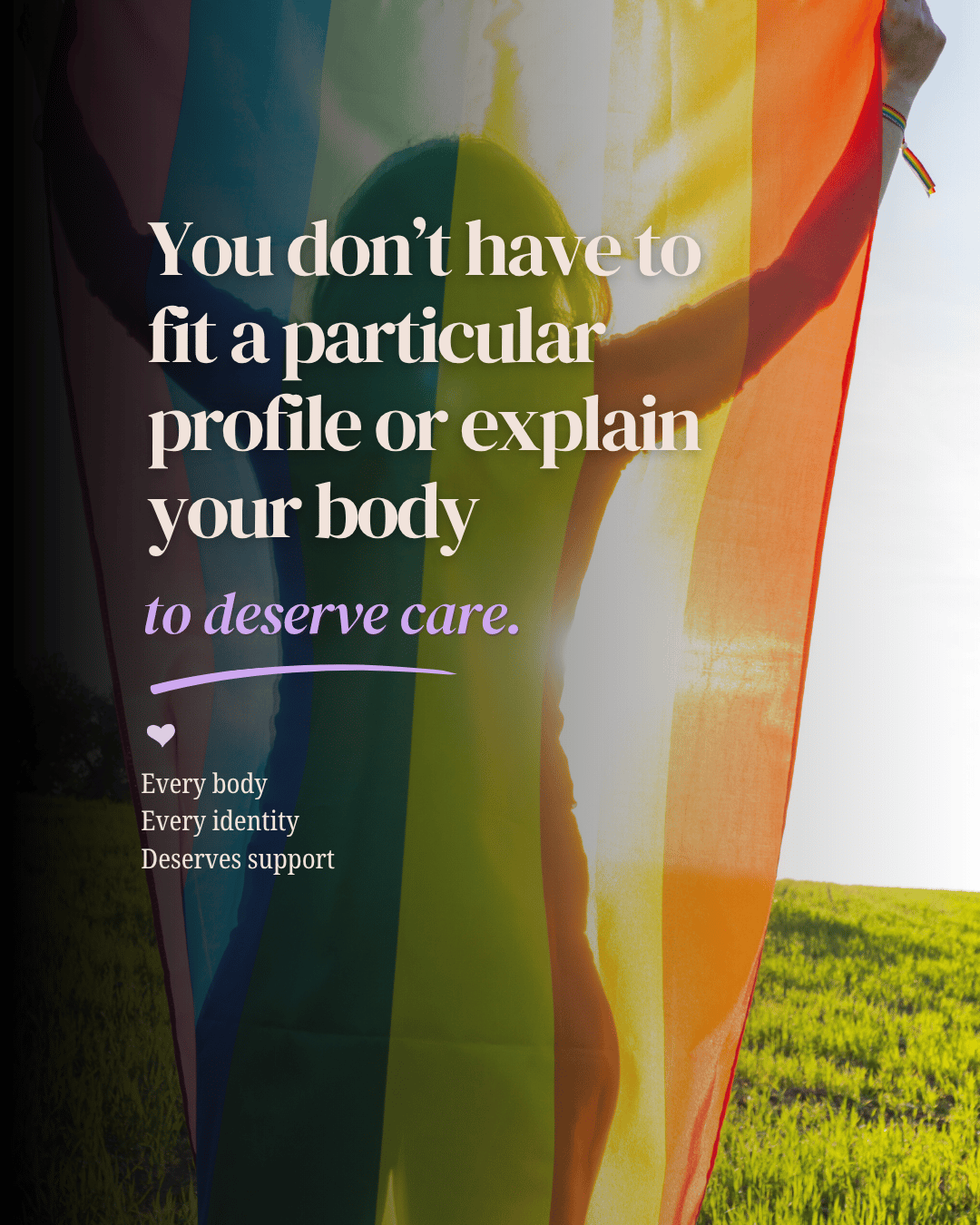
You don’t have to fit a particular profile or explain your body to deserve care.

Jun Blog2


Breast Cancer in Canada: An Inclusive Look at the Numbers

Breast and chest health is something many people put off. It doesn’t always feel urgent. But these numbers might make you reconsider waiting.

Jun Blog3

According to the Canadian Cancer Society’s 2026 projected estimates:

  • An estimated 32,400 women in Canada will be diagnosed with breast cancer in 2026 – roughly 89 per day. 
  • 300 men in Canada will also be diagnosed with breast cancer this year. Most will not have known they were at risk.
  • About 1 in 8 people with breasts will develop breast cancer at some point in their lifetime. 
  • The 5-year survival rate for breast cancer in Canada is approximately 89%. That number is tied to how early changes get noticed. 

Those numbers only count the people currently being counted, which is its own issue. The Canadian Cancer Society has acknowledged that data on breast and chest cancer in transgender, non-binary, and gender-diverse people is not being collected in a way that reflects the real world. 

What research does show is that 2SLGBTQI+ people face more barriers to screening. Screening rates are lower, which means cancers are often caught later. And when people can’t safely access the system, they often aren’t counted by it either. That’s part of why the data gaps exist in the first place. 

Closer to home, Saskatchewan has been expanding access to screening without a doctor’s referral. As of January 2026, women aged 43 and older can now self-refer. That age is expected to drop to 40 by the end of this month, June 2026. 


Why Feeling Safe Enough to Ask Is the Real Barrier

If you’ve been putting this off, you’re not alone.

People come to this late for a lot of reasons. Body shame that started young. A past healthcare experience that left them feeling dismissed. Language that never reflected their body. Or simply never being given clear, usable information in the first place.

Research across 2SLGBTQI+ communities is consistent on this. Screening rates are lower, and discrimination in healthcare is a major factor. What makes the biggest difference is having a provider who communicates well and makes people feel respected. 

In practice, that means the barrier for many people is the relationship. Whether someone in that space makes them feel like they belong there.

For a lot of people in the 2SLGBTQI+ community, that hasn’t been their experience. They’ve had to assess safety before accessing care. They’ve had to explain their bodies to receive basic information. They’ve been misgendered, rushed, or made to feel like their needs were inconvenient.

When people can’t safely access care, they often aren’t counted by it either. That is part of why there are still gaps in the data. 

Sephira Healing in Saskatoon was built with this in mind. Care where consent is explicit from the start, where no explanation is required, and where the people walking through the door don’t have to fit a particular picture to be welcomed.


Get to Know What Normal Breast And Chest Feels Like For You


I’ve found most people were never really taught how to understand their own breast or chest health. What they did learn was often clinical, fear-based, or built around a very narrow idea of what a body is supposed to look like. So they’re left trying to make sense of it on their own.

The questions I hear most often are things like:

• What should this actually feel like?
• What is normal for my body specifically?
• If I bind, or I’ve had surgery, or things have changed a lot, does any of this still apply to me?
• Is there a space where I can ask this without having to explain myself first?

Breast and chest tissue varies from person to person. It can feel soft or firm, lumpy or smooth, more sensitive at certain times, and different from one side to the other. All of that can fall within a normal range.

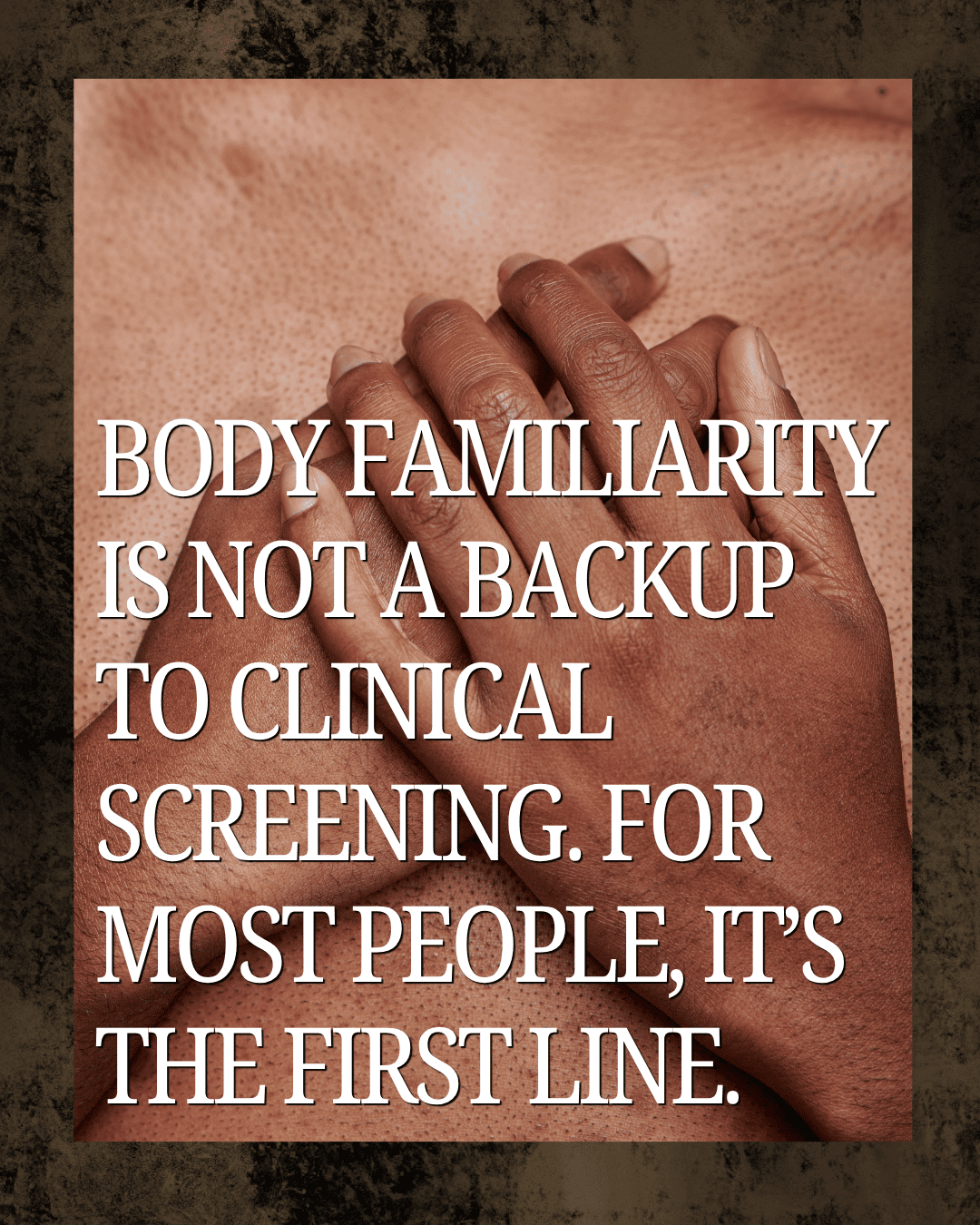
What matters most is getting familiar with your own body as it is right now.

Bodies change over time, and hormones play a big role in that. Pregnancy, postpartum, perimenopause, menopause, hormonal therapy, and aging all affect how tissue feels. A lot of the fear people carry comes from noticing something different and not knowing what it means. Change does not automatically mean something is wrong.

For people who bind or have had surgery, the picture is different again. Scar tissue can feel firm or tight and often changes for months or even years. Understanding what your body feels like now helps you make sense of those changes. There is no textbook version to match.


How to Do a Visual and Physical Breast and Chest Self-Exam

Here’s something worth knowing before anything else. Research looking at 462 breast masses found that 96% of cancers and 81% of ultrasound findings were first identified by the person themselves, not by a clinical exam or mammogram. 

Jun Blog4

The approach I teach at Sephira Healing is simple and sustainable. The goal is to build a relaxed familiarity with your body so you can notice when something changes.

There are two important parts to this: a visual check and a physical check.

The visual check

Standing in front of a mirror, look at your breast or chest area with your hands on your hips, then with arms raised overhead. You’re simply looking for anything that seems new or different: changes in shape or symmetry, skin dimpling or puckering, or any change around the nipple. If you’ve had surgery, get familiar with what your body looks like now so you’ll notice when something changes.


The physical check

You can do this lying down or in the shower. The water and soap in the shower lets your fingers move more easily across the skin, which some people find helpful. Just make sure you’re feeling relaxed and ease when before you start.

  1. Use the pads of your fingers to get a feel for your breast or chest tissue. Note – don’t use the tips of your fingers. The pads cover more surface area and are more sensitive to texture changes.
  2. Work through the whole area in a spiral pattern, starting at the nipple and moving outward. Cover from your collarbone down, across to your armpits, and all the way to the lower edge of your breast or chest tissue. Put one arm over your head to access the side near the armpit.
  3. Use varying pressure (light, medium, and firm) as you go. Different pressures pick up different things.
  4. Gently check your nipples for any discharge.
  5. Notice what you feel. Not to diagnose anything. Just to get a sense of what’s normal for you right now. Soft spots, firmer areas, any tenderness. This is just information.

Timing

If you menstruate, the best time to do this is a few days after your period ends, when hormonal changes have settled and tissue is in a more typical state. If you don’t menstruate, choosing a consistent day each month works well.


A few things worth knowing as you go
•  One side feeling slightly different from the other is common and usually normal.
•  Tenderness that comes and goes with your cycle or with hormonal changes is usually not a concern.
•  If you have scar tissue from surgery, it can feel quite firm or dense. Getting to know how yours feels specifically is important.
•  If you bind, checking on days you’re not binding is easiest, but even a quick check through lighter fabric gives you a sense of what’s there.
•  If you find something that feels harder than the surrounding tissue, that’s worth noting. A lump will usually feel harder than other parts of the area, though people with dense or cystic tissue may experience lumps that feel different.

If you’ve never done anything like this before, or if the idea of touching that part of your body brings up difficult feelings, that’s worth knowing about yourself too. A lot of people carry complicated relationships with their breast or chest area. That’s not unusual, and it’s part of what the work that Sephira Healing addresses.

If you’d rather be guided through this, you can learn more about hands-on and educational support here: https://www.sephirahealing.ca/treatment-options.


What to Watch for in Breast and Chest Health

When you know what your body normally feels like, you'll notice when something is genuinely different.

Things to pay attention to:
•  A new lump or thickened area that wasn’t there before
•  Changes in shape, size, or how one side compares to the other
•  Skin dimpling or changes in texture
•  Nipple changes or discharge
•  Persistent pain in one area that doesn’t go away on its own

If something feels different and doesn’t settle, it’s worth following up with a healthcare provider. Most changes turn out to be nothing. And for the ones that do need attention, catching them earlier means having more options. Canada’s breast cancer 5-year survival rate of approximately 89% reflects that. Knowing your body is just the practical part of it. 

You don’t need to be certain something is wrong to ask about it.


Breast and Chest Health Questions for Specific Situations

What do lumps in the breast or chest area mean?

A lot of lumps are completely benign. Many are related to normal tissue changes, hormonal shifts, or cysts. What’s worth paying attention to is whether something is new or changing, and whether it resolves on its own. Getting familiar with your body over time is more useful than trying to evaluate any single moment against a checklist.

What should people know about breast and chest health after surgery?

Scar tissue from mastectomy, lumpectomy, top surgery, or reconstruction can feel firm, tight, or quite different from what’s around it. It often keeps changing for a year or more after surgery. Gentle care and body awareness matter here. Breast and chest massage therapy and lymphatic drainage support can make a real difference in both physical comfort and feeling reconnected to that part of the body. Pam works with post-surgical bodies regularly and understands the specific ways tissue changes after different procedures.

Does breast and chest health apply to people with implants?

Yes. Having implants changes how tissue feels, and staying familiar with your body still matters. You can learn what’s normal for you specifically and notice when something shifts. That familiarity is part of good self-care regardless of surgical history.

Is binding bad for breast and chest health?

Binding is an important part of daily life for a lot of people, and breast and chest health care needs to include that without judgment. There are things worth being mindful of: breath restriction, skin irritation, and muscle tension. Giving the body breaks when possible and paying attention to discomfort helps. Pam addresses binding specifically as part of her practice because it’s part of the real picture of breast and chest health for many people she works with.

How do hormones affect breast and chest tissue?

Hormones have a significant effect on breast and chest tissue throughout life, through menstrual cycles, pregnancy, perimenopause, menopause, and hormonal therapy. If tissue feels different than it used to, more tender or dense or active, that often has a hormonal explanation. Having language for that shift can replace a lot of unnecessary worry. Pam’s Healthy Breast Foundations program covers hormonal changes as a core thread, because it’s one of the things most people were never taught clearly. Contact for details.

Can men get breast cancer?

Yes. In Canada, an estimated 300 men will be diagnosed with breast cancer in 2026. Most will not have known they were at risk. Men have breast tissue, and male breast cancer is underdiagnosed largely because awareness is so low. Body familiarity matters for anyone with tissue in that area. 


Where to Start

Breast and chest health doesn’t have to be something you approach with dread or obligation.

A lot of people have avoided this part of their body for a long time, for reasons that make complete sense. Body shame, past experiences, language that left them out, or simply never having had a useful conversation about it. That's a really common place to be.

Getting started doesn’t require having it figured out. It can just look like:
• Trying the simple check-in described in this guide
• Reading through the program options at Sephira Healing to see what resonates
• Reaching out to ask a question, even if you’re not sure what you need yet

Sephira Healing is showing up at Pride this month in Saskatoon. We’ll be doing some demonstrations and would be happy to answer more questions there.

Additional Resource

One resource that really helped me better understand the differences between gender identity, gender expression, biological sex, and attraction was the Genderbread Person. I found it to be a simple and approachable visual explanation for concepts that can sometimes feel overwhelming or confusing when the language is new.

The resource explains that:
• gender identity is how someone experiences themselves internally
• gender expression is how someone presents themselves outwardly
• biological sex refers to physical characteristics someone is born with or develops over time
• attraction refers to who someone is emotionally, romantically, or physically drawn to

One thing I appreciated about the resource is that it recognizes these experiences can exist on spectrums rather than rigid boxes. Language and understanding continue to evolve over time, and most people are learning as they go.

You do not need to understand every term perfectly to treat people with kindness and respect. Curiosity, openness, compassion, and willingness to listen go a long way in helping people feel safe and welcomed.

I’ve added more about this on my website if you’d like to explore it further.
https://www.sephirahealing.ca/the-hub/my-blog/what-ive-learned-about-gender-identity-expression-and-attraction


Frequently Asked Questions About Breast and Chest Health in Canada

Does breast cancer affect 2SLGBTQI+ people differently?

LGBTQ+ people aren’t at higher biological risk, but they face more barriers to screening and care, so cancers tend to get caught later. The Canadian Cancer Society has acknowledged that data on breast and chest cancer in transgender, non-binary, and gender-diverse people is currently incomplete. 

What is breast and chest health, and is it different from breast health?

Breast and chest health is a broader term that covers everyone with tissue in that area, regardless of gender identity, surgical history, or anatomy. It was intentionally expanded in clinical settings to include trans and non-binary people, people who have had mastectomies, and anyone who doesn’t identify with the word “breast.” Sephira Healing uses this language as standard.

What is the survival rate for breast cancer in Canada?

Approximately 89% at five years, according to the Public Health Agency of Canada. That number is higher when changes are caught early, which is why body familiarity and timely follow-up matter. 

What should someone do if they notice a change in their breast or chest?

Follow up with a healthcare provider. Most changes won’t be cancer, but early awareness gives you more options if something does need attention. You don’t need to wait until you’re certain something is wrong.

Can people in Saskatchewan self-refer for a mammogram?

As of mid-2025, Saskatchewan women aged 45 and older can self-refer for a screening mammogram without a doctor’s requisition. The province is working toward lowering that age to 40 by June 2026. Awareness of the change has been low, and health advocates have called on the government to communicate eligibility more actively. 

What does breast and chest massage therapy involve?

Breast and chest massage therapy is specialized, consent-based therapeutic work that supports the health of breast and chest tissue. It can address pain, tightness, lymphatic congestion, scar tissue, and disconnection from the body after surgery or trauma. At Sephira Healing, it is always paired with education and body awareness so clients leave understanding their own body better.

Where can I find inclusive breast and chest health care in Saskatoon?

Sephira Healing, founded by Pam Fichtner, RMT, offers specialized, trauma-aware breast and chest massage therapy, lymphatic drainage, oncology massage care, and post-surgical recovery support in Saskatoon, Saskatchewan. The practice welcomes people of all genders and identities. No explanation or justification is required to receive care. See all services at https://www.sephirahealing.ca/treatment-options


Sources

All statistics and claims in this post can be verified through the sources listed below. If any information has been updated since publication, please contact us so we can keep this resource accurate.

  1. Canadian Cancer Society – Breast Cancer Statistics (2026 Projected Estimates) cancer.ca/en/cancer-information/cancer-types/breast/statistics
  2. Public Health Agency of Canada – Breast Cancer
    canada.ca/en/public-health/services/chronic-diseases/cancer/breast-cancer.html
  3. Canadian Cancer Survivor Network – LGBTQ+ People and Breast Cancer
    survivornet.ca/cancer-type/breast-cancer/lgbtq-information

  4. ScienceDirect (2023) – Participation, Barriers, and Facilitators of Cancer Screening Among LGBTQ+ Populations
    doi.org/10.1016/j.ypmed.2023.107451

  5. CBC News Saskatchewan (January 2026) – Experts Shocked by Mammogram Misinformation in Saskatchewan
    cbc.ca/news/canada/saskatchewan/experts-shocked-mammogram-misinformation-saskatchewan-9.7041168

  6. CMAJ Open (2019) – Breast Cancer Risk and Breast Screening for Trans People: An Integration of 3 Systematic Reviews
    cmajopen.ca/content/7/3/E598

  7. CA: A Cancer Journal for Clinicians (2025) – Breast Cancer in a Transgender Man
    acsjournals.onlinelibrary.wiley.com/doi/full/10.3322/caac.70021

  8. Canadian Medical Association Journal (2026) – Projected Estimates of Cancer in Canada in 2026
    cmaj.ca/content/198/14/E526

  9. Huang N, et al. (2022) – The Efficacy of Clinical Breast Exams and Breast Self-Exams in Detecting Malignancy or Positive Ultrasound Findings
    ncbi.nlm.nih.gov/pmc/articles/PMC8942605

  10. Healthline – Breast Self-Exam: Preparation, Procedure, and Risks (medically reviewed by Valinda Riggins Nwadike, MD, MPH; updated July 2024)
    healthline.com/health/breast-lump-self-exam

Sephira Healing
Saskatchewan flag
Pride flag
— Address

201-611 9th Street East
Saskatoon, SK S7H 0M4

— Contact

Phone: (306) 230-7407

Email: sephira@sasktel.net