Why Do Women Normalize Pain? 4 Ways Pain Shows Up and What Can Help
Breast tenderness, chest tightness, swelling, burnout, and the symptoms women learn to ignore
Pam Fichtner, BA, RMT | Breast and Chest Health Educator | Founder, Sephira Healing | Saskatoon, Saskatchewan
TL;DR
"After nearly 30 years of practice, the thing that surprises me most is not how much pain women are in. It's how long they've been in it without anyone asking."
• 70% of people living with chronic pain are women, yet historically about 80% of pain research was conducted on men (Harvard Health)
• Women wait about 30 minutes longer than men to be seen for pain in emergency settings, and are less likely to receive pain relief at the same reported pain levels (PNAS, 2024)
• One in six women waits more than a year for a pain diagnosis, compared with one in ten men (Gender Pain Gap Index, 2026)
• Pain normalization is not a personal failing. It's the result of being taught, repeatedly, that your discomfort is less urgent, less credible, or less worth investigating
• Breast tenderness, chest tightness, swelling, fatigue, and tension are among the most commonly normalized symptoms, and among the most treatable
• Fall is when people rebuild routines. This is a good time to stop waiting for a crisis and start paying attention to the signals you've been overriding
Many women live with pain for months or years because they've learned, from doctors, from culture, and often from their own families, that it's probably "just stress," "just age," or "just part of being a woman." I'm sharing what the research actually says about why women's pain gets minimized, the four layers of pain (physical, emotional, mental, and self-silencing) that can build on each other, how it affects us, and how the right kind of support can help. If you only take one thing from this page, take the question at the end.
"I don't know why I'm crying."
Her appointment had barely begun when her tears started to roll down her face. It caught her completely off guard, she was embarrassed, and immediately began apologizing for "getting emotional."
It happens more often than you might think, and it doesn't surprise me anymore. People often assume those tears are caused by the treatment itself. That hasn't been my experience.
Most of the time, the tears come because the pressure has gotten so heavy, and for the first time in a long time, there's a safe space to release it.
Her story is not unusual. Her intake form listed tight shoulders and stiffness in her upper back. That kind of musculoskeletal tension is the fight-or-flight response at work, and it's one of the most common ways I see stress show up in women. But the moment I touched her neck, the weight she had been holding for months, maybe years, finally had somewhere to go.
I'm Pam Fichtner, a Registered Massage Therapist and the founder of Sephira Healing in Saskatoon. I've been doing this work for nearly 30 years, and the thing that surprises me most is not how much discomfort women are carrying. It's how long they've been carrying it without anyone, including themselves, treating it as something worth investigating.
September is Pain Awareness Month, and I think it's a good time to ask some different questions.
When did we start believing discomfort was simply part of being a woman? And why do we apologize for it?
Most of the women I see wait to come in until they've been living with pain for months. Sometimes even years.
"I thought it was just stress."
"I figured it was part of getting older."
"I didn't want to make a fuss."
"I just thought I could push through."
That's not normal. That's normalized.
~
And notice the word doing all the work in those sentences: "just." It's the word women use to minimize their own experience. And it's usually the word they were handed first by someone else.
Research continues to show that women are more likely than men to have their pain minimized or undertreated in healthcare settings. A 2024 study of more than 21,000 emergency department visits found women were consistently less likely than men to receive pain relief, even at the same reported pain levels (Guzikevits et al., PNAS, 2024; Harvard Health, 2025).
You might recognize the name Bindi Irwin, the Australian conservationist, television personality, and daughter of the late Steve Irwin, the Crocodile Hunter. Bindi lived her pain publicly. For ten years, she was told her pain was simply something you deal with as a woman. When she finally had surgery, doctors found 37 endometriosis lesions (NBC News, 2023).
I see the other end of this in my treatment room. The doctor will just say, "You just have to live with that." And I'm like: no. I get so frustrated, because if they'd come in five years earlier, they could be moving and feeling so much better.
Instead, women are still minimizing their own symptoms and delaying conversations or care because they assume what they're experiencing is "normal."
Pain Doesn't Always Look the Way We Expect
When most of us hear the word pain, we think of an injury or illness. But we all know pain can show up in a lot of different ways. Sometimes it is obvious but sometimes it's slow, gradually becoming part of how you live everyday life.
Here's how that happens. I've watched it in slow motion for nearly three decades. A symptom appears. It gets dismissed, by a doctor, a partner, or the woman herself. She learns not to mention it. And over time, the nervous system adapts to whatever is consistently present. The contrast between "comfortable" and "not comfortable" fades, and she stops noticing. That isn't weakness. It's the nervous system doing exactly what it's designed to do. But it has a cost, and that cost compounds.
1. Physical Pain: The Discomfort We Push Through
This is the pain we usually notice first. 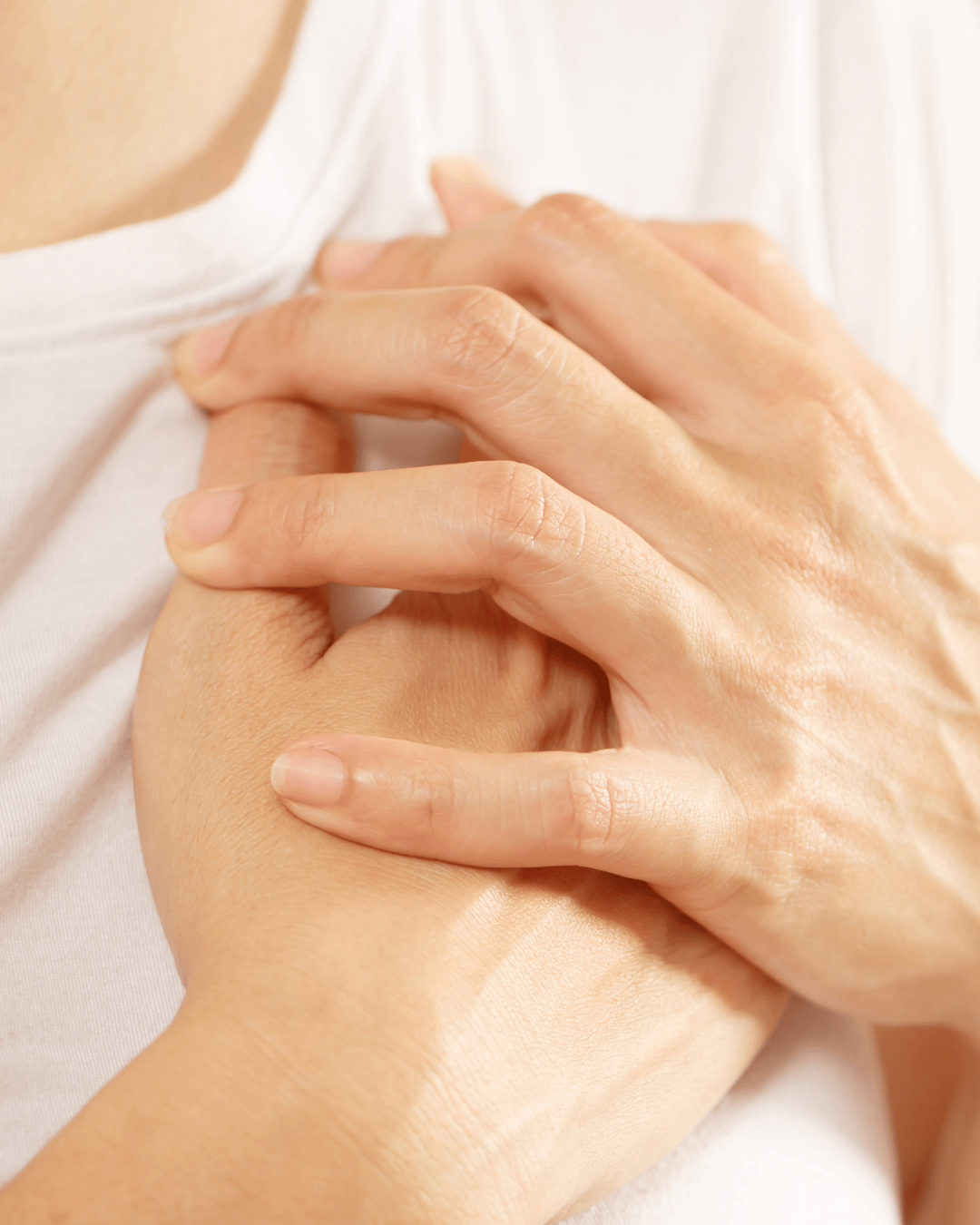
Breast tenderness. Chest tightness. Neck and shoulder tension. Pelvic discomfort. Persistent headaches. Digestive discomfort. A feeling of fullness or heaviness in breast and chest tissue. Post-surgical tightness or scarring that no one mentioned was treatable. Fatigue that won't go away even after a good night's sleep.
Many of these experiences are common. But that does not make them normal.
Common simply means many people experience them. It doesn't mean they should be dismissed.
RESEARCH SNAPSHOT
Across more than 21,000 emergency department visits in two countries, women were consistently less likely than men to receive prescriptions for pain relief, even at the same reported pain levels, and regardless of the physician's sex. Source: Guzikevits et al., Proceedings of the National Academy of Sciences, 2024.
2. Emotional Pain: The Feelings We Keep Carrying
Not all pain is physical. Sometimes it's:
• carrying grief you haven't had time to process
• feeling overwhelmed on more days than not
• anxiety that never seems to fully go away
• feeling disconnected from yourself
• constantly putting on a brave face
For some women, this includes experiences of trauma, sometimes recent, sometimes decades old. You don't have to name it, explain it, or have words for it at all for it to be part of what you're carrying.
Many women have become so accustomed to carrying emotional pain that it just feels like part of who they are now. That's not something any woman should have to keep accepting.
3. Mental Pain: That Weight We Carry Every Day
 Mental pain is another kind of pain that often goes unnamed. Some people call it the mental load. Either way, it's a lot. And it's a heavy weight no one else can see.
It's remembering appointments. Managing schedules. Checking on aging parents. Supporting children. Keeping work moving. Making hundreds of small decisions every day.
None of it looks like pain from the outside. But in my treatment room, I hear it, I see it, and I can feel it.
When I check in with a client partway through a treatment, she'll often have missed what I said completely. And then it's:
"I'm sorry, I was going through what we need from the grocery store in my head."
"I'm sorry, I just remembered it's picture day Thursday and I was trying to figure out where my daughter's dress shoes are."
"I'm sorry, I'm planning my best friend's bachelorette party and I was thinking about the invitation list."
"I'm sorry, I was rehearsing a hard conversation I have to have at work tomorrow."
"I'm sorry, I was thinking about how my dad sounded on the phone last night."
Research consistently links this kind of ongoing caregiving and household responsibility with chronic stress, disrupted sleep, and exhaustion in women (BMC Public Health, 2025).
When your mind never gets a real break, the nervous system stays on duty. I can see your shoulders up by your ears and feel the tension in your neck. I can see how shallow you're breathing and how tight your jaw is from clenching your teeth. And I see it on intake forms every single week: anxiety, stomach aches or headaches that keep coming back, and feeling exhausted or low energy even after a full night's sleep.
These are not things that should become a permanent part of your life. Being tired all the time should never become something we simply accept without asking why. And the women carrying the most are usually the last to ask for help.
4. Self-Silencing: The Needs We Put Last
Psychologists have had a name for this, self-silencing, since the 1980s. Researcher Dana Jack first documented the pattern, the constant caretaking, the pleasing, the holding back of what you actually feel and need, and linked it to depression. The research since then has gone further: self-silencing has been connected to physical illness too, and even to a higher risk of premature death (TIME, 2023).
It can be dangerous not to ask for what you need.
But too often I hear women saying things like:
"It's probably nothing."
"I don't want to waste anyone's time."
"I'm not really the breadwinner... I can't really justify spending that on myself."
"I'll deal with it later."
"Someone else needs it more than I do."
Here's what strikes me about these women: they are not people who neglect health. They book their kids' dental checkups, their mom's specialist appointments, their husband's physio. Every calendar in the house is managed. And their own referral has been sitting on the fridge for eight months.
But can you blame them? A systematic review spanning 86 studies and more than 20,000 women found that shame, embarrassment, normalizing of symptoms, and the expectation that clinicians would trivialize their concerns were the most consistent reasons women delayed seeking help for pelvic health symptoms, even when those symptoms were affecting their daily lives (Jouanny et al., BMC Women's Health, 2024). When that's what women have learned to expect, why would they respond any differently?
We need to do better.
~
Self-silencing doesn't make pain disappear. It just forces us to live with pain longer than we should.
And here's what I want to say to the woman who doesn't feel she can justify the cost of her own care: you are not a lower priority than everyone else on that calendar. Caring for yourself is not taking something away from your family. It's how you keep having something to give them.
What Does Masking Pain Actually Cost?
Most women I meet have an unspoken threshold: "I'll do something about it when it gets bad enough to justify it." Here's the problem with that threshold. It keeps moving. When discomfort has become your everyday baseline, "bad enough" gets measured against a bar that is already set too high.
And waiting isn't neutral. It costs.
It costs your body. Pain that goes unaddressed rarely stays contained. You adjust how you hold your shoulders, how you breathe, how you move, and over time those compensations become their own sources of tension and restriction. Scar tissue and lymphatic congestion are treatable, but they don't resolve on their own.
It costs your nervous system. An unresolved signal takes energy to manage, all day, every day. That's energy no longer available for sleep, focus, patience, and recovery. It's part of why "tired all the time" and "sore all the time" so often show up together.
And it costs your self-knowledge. When you've been overriding your body's signals long enough, you lose track of your own baseline. Your baseline is one of the most valuable health tools you have, because knowing what's normal for you is how you notice when something changes. That's not something an annual appointment can do for you. It has to be maintained. And the good news is, it can be rebuilt.
Finding the Right Kind of Support
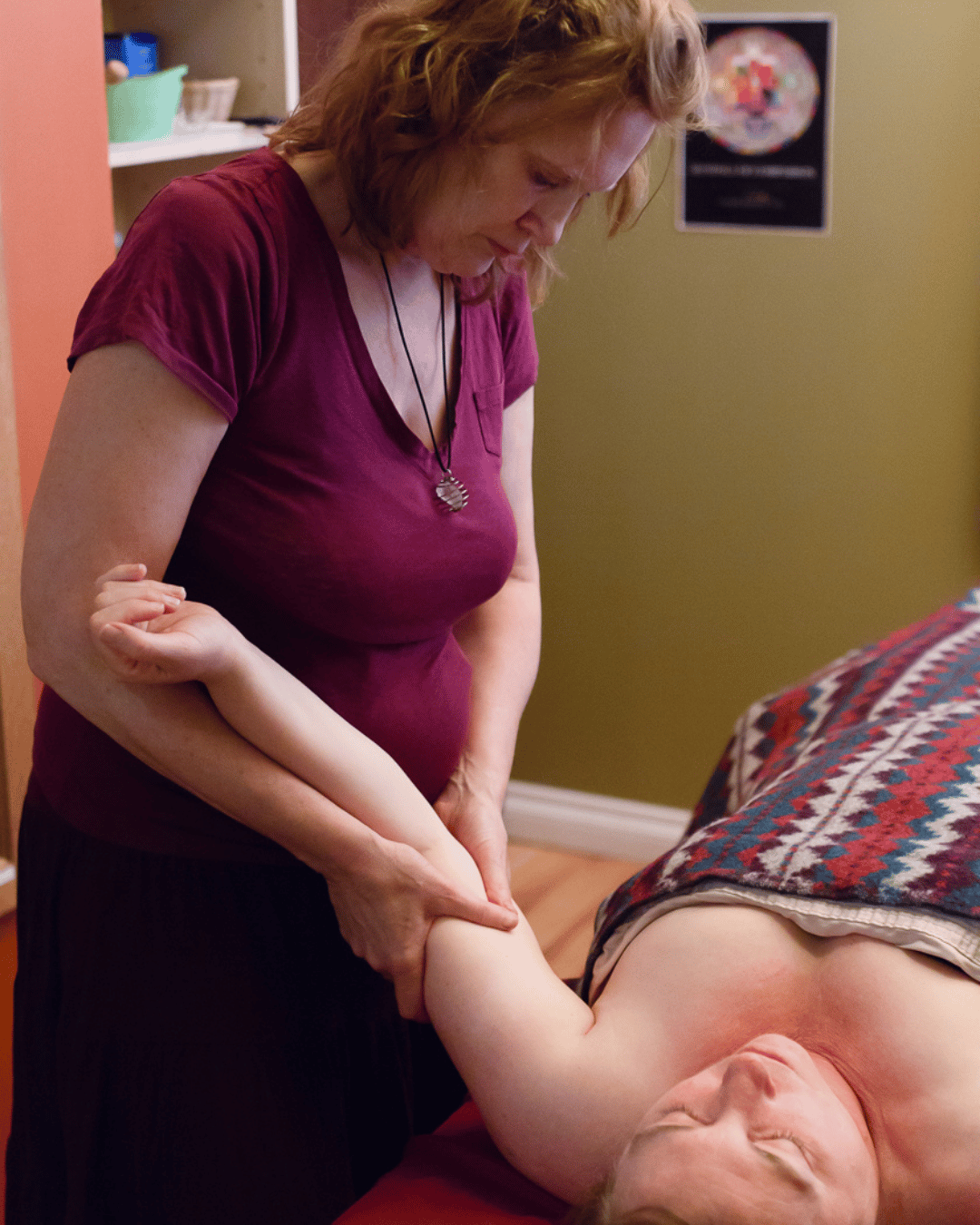 One of the most important things I've learned over the years is that there isn't one solution for every type of pain.
Different experiences call for different kinds of support.
If you're carrying chronic stress or overwhelming life experiences, a gentle, trauma-aware approach like Somatic Experiencing® could help you work through it (without having to retell your story or relive anything).
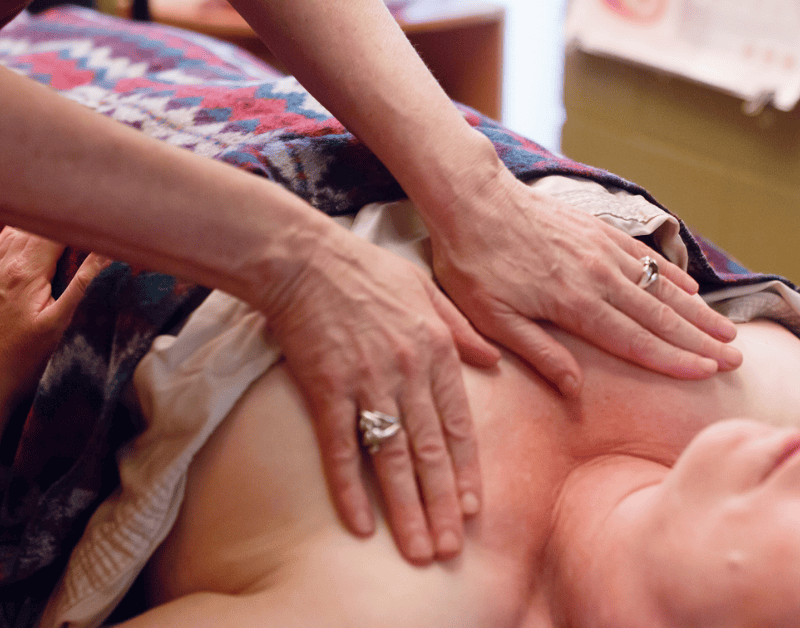
If you're dealing with chest tightness, scar tissue, lymphatic concerns, or changes after surgery, Breast and Chest Massage Therapy could be where your care begins.
If it's headaches that keep coming back, persistent tension, or an overloaded nervous system, a light-touch approach like Craniosacral Therapy could help things finally settle.
If it's an upset stomach, abdominal tightness, or restrictions that are limiting your mobility and how you move, Visceral Manipulation works with those deeper patterns.
And if you can't remember the last time you truly rested, Reiki or Energy Balancing may be the gentlest place to start: an hour where nothing is asked of you. Clients often describe deep, uninterrupted rest and leaving feeling lighter and more like themselves.
But the first step isn't deciding which therapy is right for you. It's deciding to stop minimizing, normalizing, and living with your pain.
When Pain Should Be Checked by a Healthcare Provider
Body awareness is not health anxiety. The goal of paying attention to your body is not to create fear. It's to know yourself well enough that you notice when something is different from your normal.
And I'll say this plainly: I work alongside doctors, not instead of them. Some of the most important work I do is telling a client, "that one is for your physician, and soon."
For breast and chest tissue, see a healthcare provider if you notice:
• A new lump or change that doesn't follow your usual cycle or doesn't resolve
• Skin dimpling, puckering, or texture changes
• Nipple discharge that is new, unexpected, or blood-tinged
• One-sided swelling, redness, or warmth that persists or worsens
For the rest of your body, see a healthcare provider if you notice:
• Swelling in an arm or leg that's new, one-sided, or doesn't go down
• A headache that's sudden, severe, or unlike any you've had before
• New numbness, tingling, or weakness
• Digestive changes that persist for more than a few weeks
• New or worsening back pain in midlife, or a fracture from a minor fall or bump, both worth a bone health conversation
• Any pain that is severe, sharp, or significantly interferes with daily function
• And if the emotional weight you're carrying is starting to feel unmanageable, that deserves care too. Your doctor or a mental health professional is the right place to start.
Trust your instincts. You know your body better than anyone else does. That knowledge is worth protecting, and it is worth acting on.
You Don't Need to Earn Support by Suffering Longer
 You don't need to be in crisis to deserve care. You don't need to justify your symptoms to access support. And you don't need to reach some threshold of suffering before your discomfort finally counts.
The most consistent thing I hear from new clients is, "I should have come sooner." It's not that their situation was dire but they spent years tolerating something that could have been addressed much earlier.
If you want one small place to start, try this: once a week, place your hands on your chest, take a few slow breaths, and just notice. Not an exam. Not a hunt for problems. Familiarity. Being the person who would notice if something changed, because you know what's normal for you.
And if something has been bothering you for weeks, months, or even years, here's the question I'd ask you to sit with this month:
"What have I been dismissing, and is it time to understand it better?"
~
Sometimes, that's the very place healing begins.
Frequently asked questions
Is it normal to cry during a massage therapy treatment?
Yes, and it's more common than most people realize. When the nervous system finally settles, emotion sometimes comes with it. You don't need to apologize, explain, or hold it together in my treatment room. It's a normal response, and you're safe to let it happen.
What should I expect at my first breast and chest massage therapy appointment?
A conversation before anything else. We talk about what's going on, what you're comfortable with, and what the treatment will involve, and nothing happens without your consent. You're draped the way you would be for any massage therapy treatment, only the area being worked on is uncovered, and you can pause, adjust, or stop at any point. We go at your pace, every single time. Most new clients tell me the appointment felt far more ordinary, and far more comfortable, than they expected.
Is breast and chest massage therapy actually a real, professional treatment?
Yes. It's within the regulated scope of practice for Registered Massage Therapists, with specific post-graduate training behind it. I trained in it in British Columbia, I've taught it to other RMTs, I co-authored professional writing on it, and I'm a court-recognized expert witness in breast massage therapy in Saskatchewan. If it feels strange to ask about, that's not you. That's how little we were all taught. There are no silly questions in my treatment room.
Can I book massage therapy during cancer treatment?
Yes, this is one of my specialties. Oncology massage therapy is adapted care: gentler, informed by your treatment stage, and coordinated with what your care team advises. I've spent decades making sure people living with and beyond cancer aren't turned away from safe, comfortable hands-on care. If you're in treatment, mention it when you reach out and we'll plan around it.
Is massage therapy covered by insurance benefits?
Many extended health benefit plans cover treatments from a Registered Massage Therapist. Coverage varies by plan, so check yours for massage therapy or RMT services, and you'll receive a receipt for your treatments to submit. If cost is a factor, tell me. We'll figure out where to start.
Do you only work with women?
No. Every body is welcome here, regardless of gender identity, body type, surgical history, or diagnosis. You won't have to educate me before you can receive care, and you won't have to explain your body to be treated with respect in this space.
What if I can't get to the clinic?
There are options. I offer home visits, including lymphatic drainage massage therapy at home, which matters for people in treatment, recovering from surgery, or with limited mobility. Somatic Experiencing sessions are also available virtually, so distance doesn't have to be the reason you wait.
What is Somatic Experiencing, and is it right for me?
Somatic Experiencing is gentle, present-moment work with your nervous system's stress responses. There's no requirement to retell your story or relive anything. If you feel like your body is stuck in high alert, or you can't fully relax even when things are calm, it may be worth exploring. Sessions are available in person and online.
Can massage therapy actually help with stress-related pain?
It can. Tension patterns from sustained stress, tight shoulders, jaw clenching, shallow breathing, and headaches respond well to hands-on care, and treatment also gives your nervous system a rare stretch of genuine rest. If pain persists or worsens, I'll always encourage you to see your doctor as well.
How do I know if my pain is normal or something worth investigating?
Normal pain has a clear cause, is time-limited, and improves. Normalized pain is discomfort that's been around long enough that it no longer registers as a problem, even though it is. A useful question to sit with: when did I last feel genuinely comfortable in this part of my body? If you can't remember, that's worth paying attention to. The goal isn't to hunt for problems. It's to know your normal well enough that you'd notice a change.
How is preventative care different from waiting until something goes wrong?
Preventative care means addressing discomfort, tension, and imbalance before they reach crisis level. It means coming in when things feel off, not when they're unbearable, and building enough body familiarity to catch small changes early instead of big changes late. In my experience, people who care for themselves this way spend less time in pain overall, not more time in appointments.
What services at Sephira Healing help with chronic pain and body awareness?
Several. Breast and chest massage therapy addresses tissue tenderness, congestion, and lymphatic concerns. Manual lymphatic drainage supports fluid movement and chronic swelling. Scar care works with post-surgical restriction that keeps contributing to tightness and pain. Somatic Experiencing and craniosacral therapy work with the nervous system's role in chronic tension. And if you'd rather start by learning at home, the Healthy Breast Foundations program and my online self-care workshop are built exactly for that.
Is breast and chest discomfort always hormonal?
Hormonal changes are one common cause, but not the only one. Lymphatic congestion, scar tissue, muscle tension, and postural patterns can all contribute. "It's just hormonal" is often used to close a conversation that deserves to stay open. And hormonal doesn't mean untreatable.
How do I book a first appointment?
If you're a new client, email me at
I'm not sure which service I need. Does that matter?
Not at all. Tell me what you're carrying, and we'll figure out the rest together. Many appointments are integrated sessions that combine approaches based on what your body needs that day.
Work with me
Sephira Healing Pam Fichtner, BA, RMT Saskatoon, SK
New clients: please email or text before booking so we can find the right fit for what you're carrying.
About the author
Pam Fichtner, BA, RMT is an educator, speaker, Registered Massage Therapist, mom of two, and founder of Sephira Healing in Saskatoon. With 30 years of clinical experience, she specializes in breast and chest massage therapy, lymphatic drainage, oncology massage therapy, craniosacral therapy, and trauma-aware somatic bodywork. Pam holds a Bachelor of Arts in Sociology and Women's Studies and trained at the West Coast College of Massage Therapy; her early work in social services and crisis intervention inspired her path into massage therapy. She is a national conference speaker, a court-recognized expert witness in breast massage therapy in Saskatchewan, and has consulted on breast cancer related research initiatives.
Sources
- Guzikevits, M., et al. (2024). "Sex bias in pain management decisions." Proceedings of the National Academy of Sciences, 121(33). Women were less likely to receive pain-relief prescriptions in emergency departments even after adjusting for reported pain scores, across both male and female physicians. https://www.pnas.org/doi/10.1073/pnas.2401331121
- Harvard Health Publishing (2025). The dangerous dismissal of women's pain. Women's pain is more often minimized by clinicians; nearly a quarter of American women live with chronic pain (CDC), a higher proportion than men. https://www.health.harvard.edu/pain/the-dangerous-dismissal-of-womens-pain
- NBC News (2023). Bindi Irwin shares endometriosis diagnosis after 10 years of dismissed symptoms; 37 lesions found at surgery. https://www.nbcnews.com/news/amp/rcna73918
- TIME (2023). How Silencing Ourselves Makes Women Sick. Dana Jack's self-silencing research and its links to depression, physical illness, and premature death. https://time.com/6319549/silencing-women-sick-essay/
- BMC Public Health via PubMed Central (2025). On caregiving burden, chronic stress, and exhaustion in women. https://pmc.ncbi.nlm.nih.gov/articles/PMC11977012/
- Harvard Health Publishing (2017). Women and pain: Disparities in experience and treatment. Historical source for the 70% / 80% research-gap figures. https://www.health.harvard.edu/blog/women-and-pain-disparities-in-experience-and-treatment-2017100912562
- Nurofen Gender Pain Gap Index Report, 4th edition (2026). One in six women (17%) waited more than a year for a diagnosis vs one in ten men (10%). https://eu-assets.contentstack.com/v3/assets/blt73c3051f4cacd5b5/blt654c281afb20be25/69fb0db21d1c51a523ec3174/FINAL_Nurofen_GPG_Report_Design.pdf
- Jouanny, C., Abhyankar, P., & Maxwell, M. (2024). "A mixed methods systematic literature review of barriers and facilitators to help-seeking among women with stigmatised pelvic health symptoms." BMC Women's Health, 24. 86 studies, 20,000+ women: stigma, shame, normalizing, and expected trivialization were the most consistent barriers to seeking help. https://pmc.ncbi.nlm.nih.gov/articles/PMC10993589/
This article is general wellness education and is not a substitute for individual medical advice. If you have new, persistent, or worsening symptoms, please see your doctor. Massage therapy services are provided by a Registered Massage Therapist within her scope of practice.